From 200 units to a factory floor
Late April 2026 was the sprint to launch: colorways settled, a manufacturing run underway, and a first real look at what it takes to turn a finished design into a physical product at scale.
Settling on beige
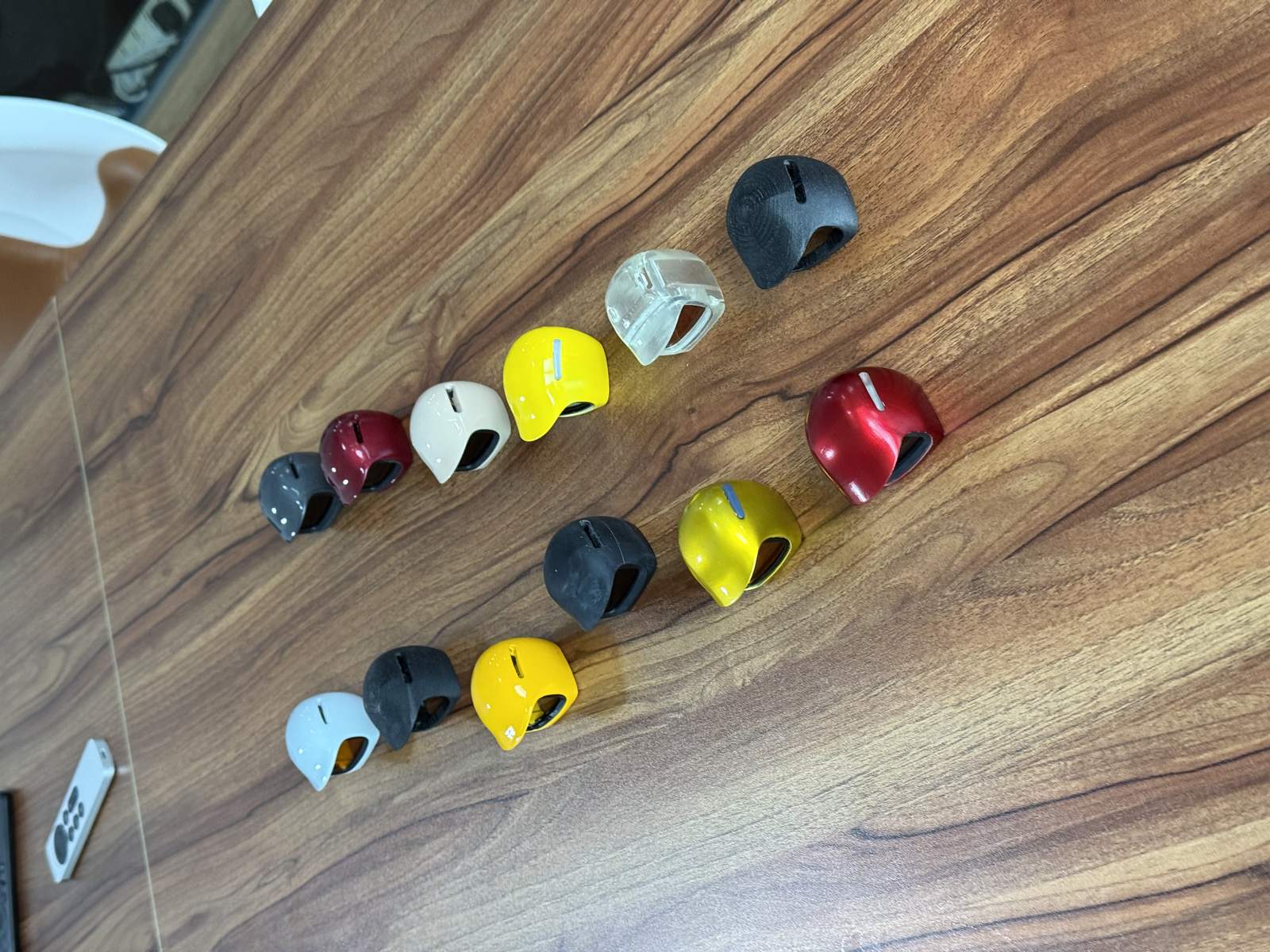
The final weeks of April tested multiple colorways side by side — red with a yellow visor, white and beige rounded forms, grey and black with red touch pads — alongside rubber display gaskets at different tolerances.
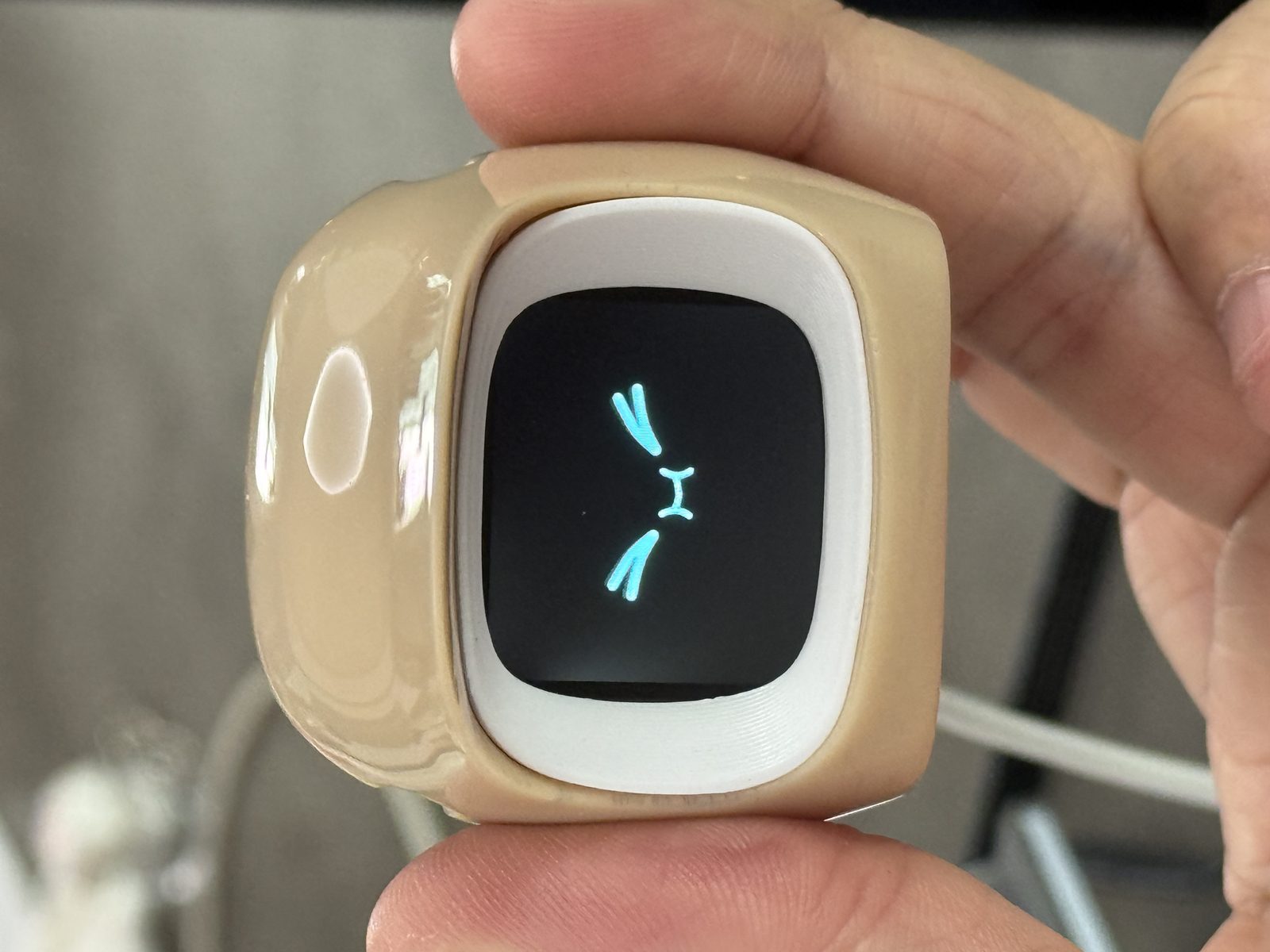
The beige/cream body is the one that stuck: compact enough to sit in a palm, with the display showing an animated face looking back at you.
Scouting for scale
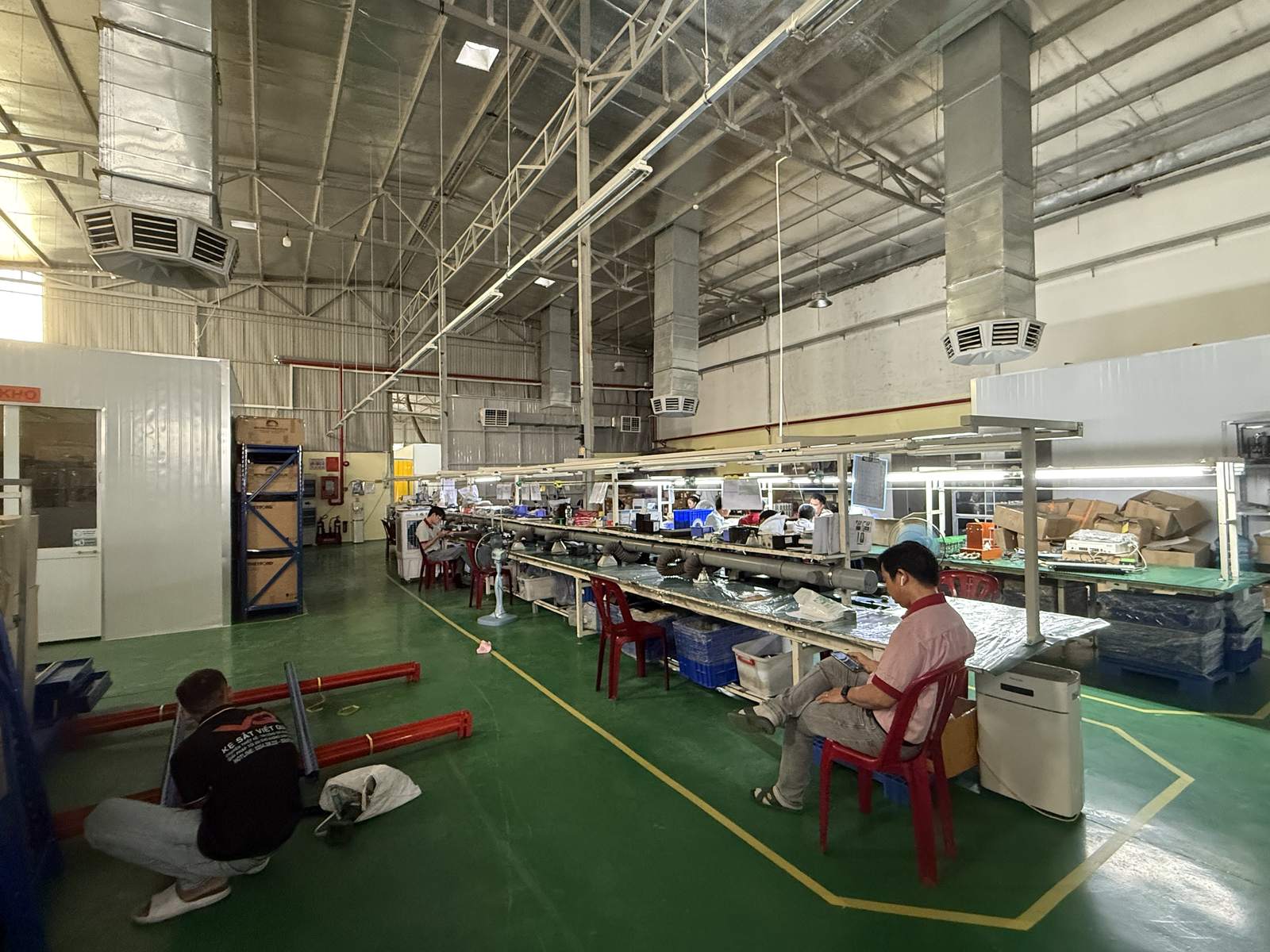
With the design locked, we visited a manufacturing partner in Vietnam to talk through what the next phase of production would need — not a vendor for the first small batch, but a factory that could take Kamoji into the thousands: sourcing, assembly, packaging, export documentation and compliance certification, end to end.
The floor was in active use — assembly lines running, component shelving along the length of the space.
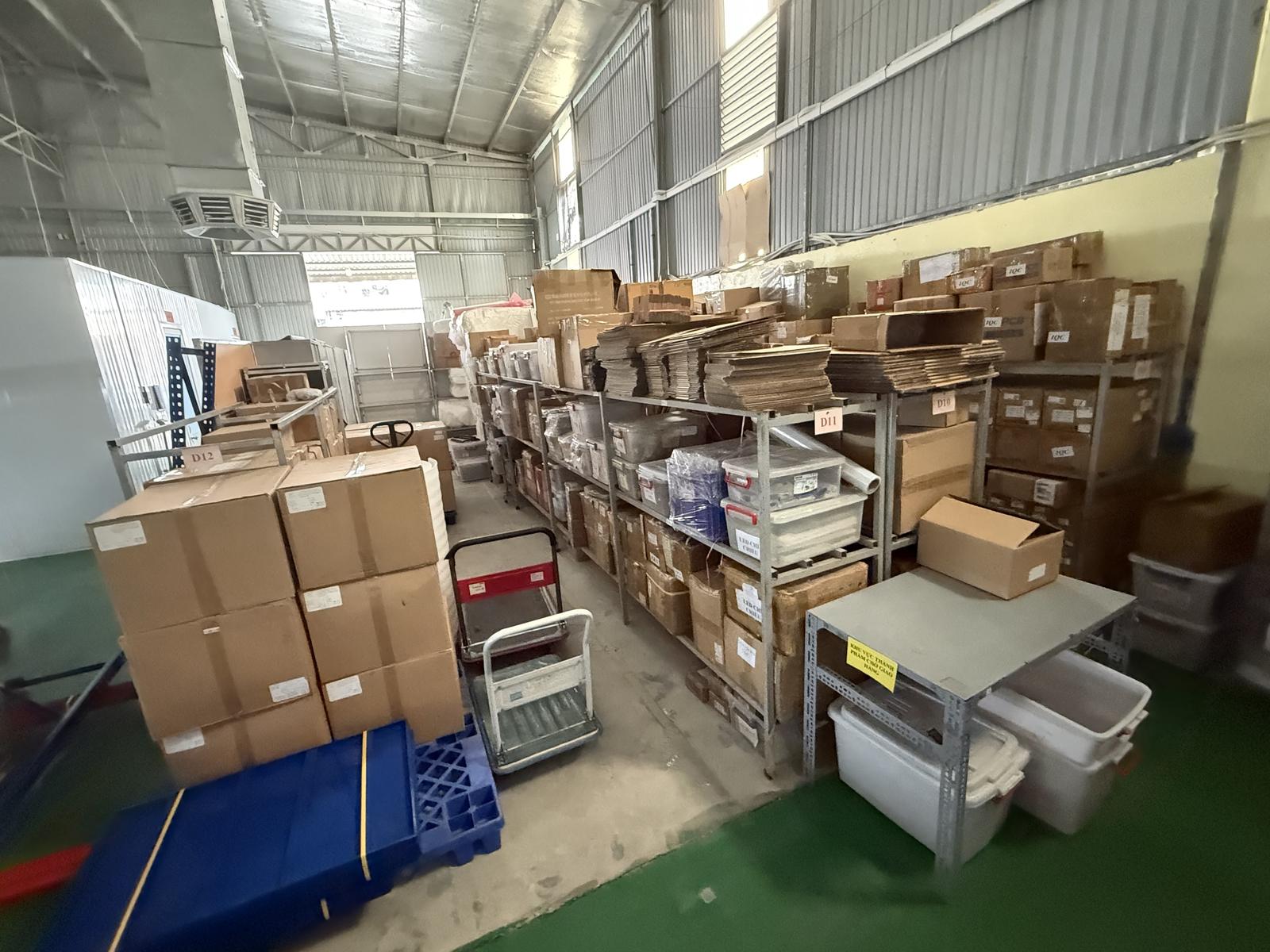
The warehouse held floor-to-ceiling racking, organised stock and logistics infrastructure already in place.
A dedicated assembly line sat idle, ready to be brought online for a new order —
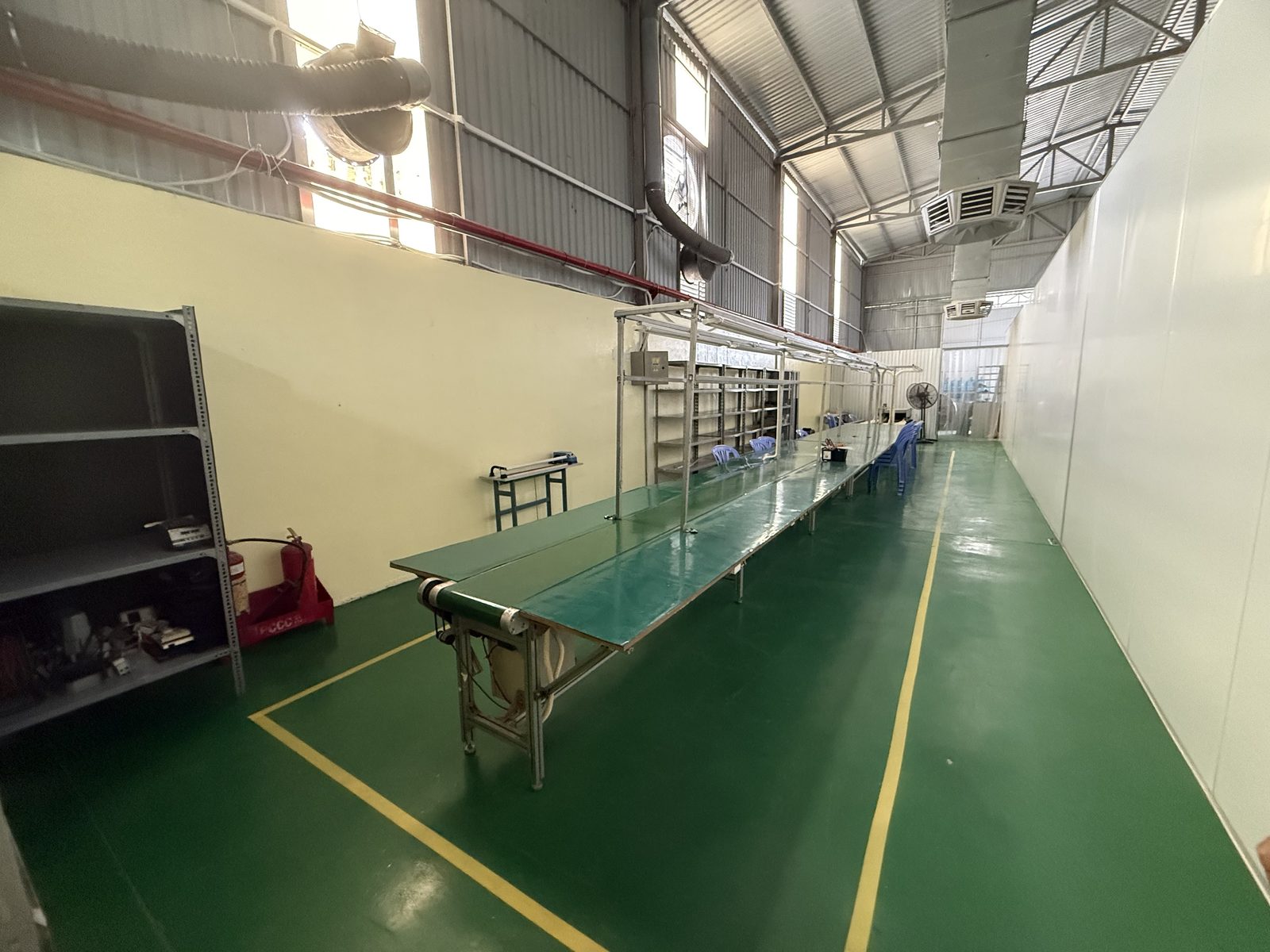
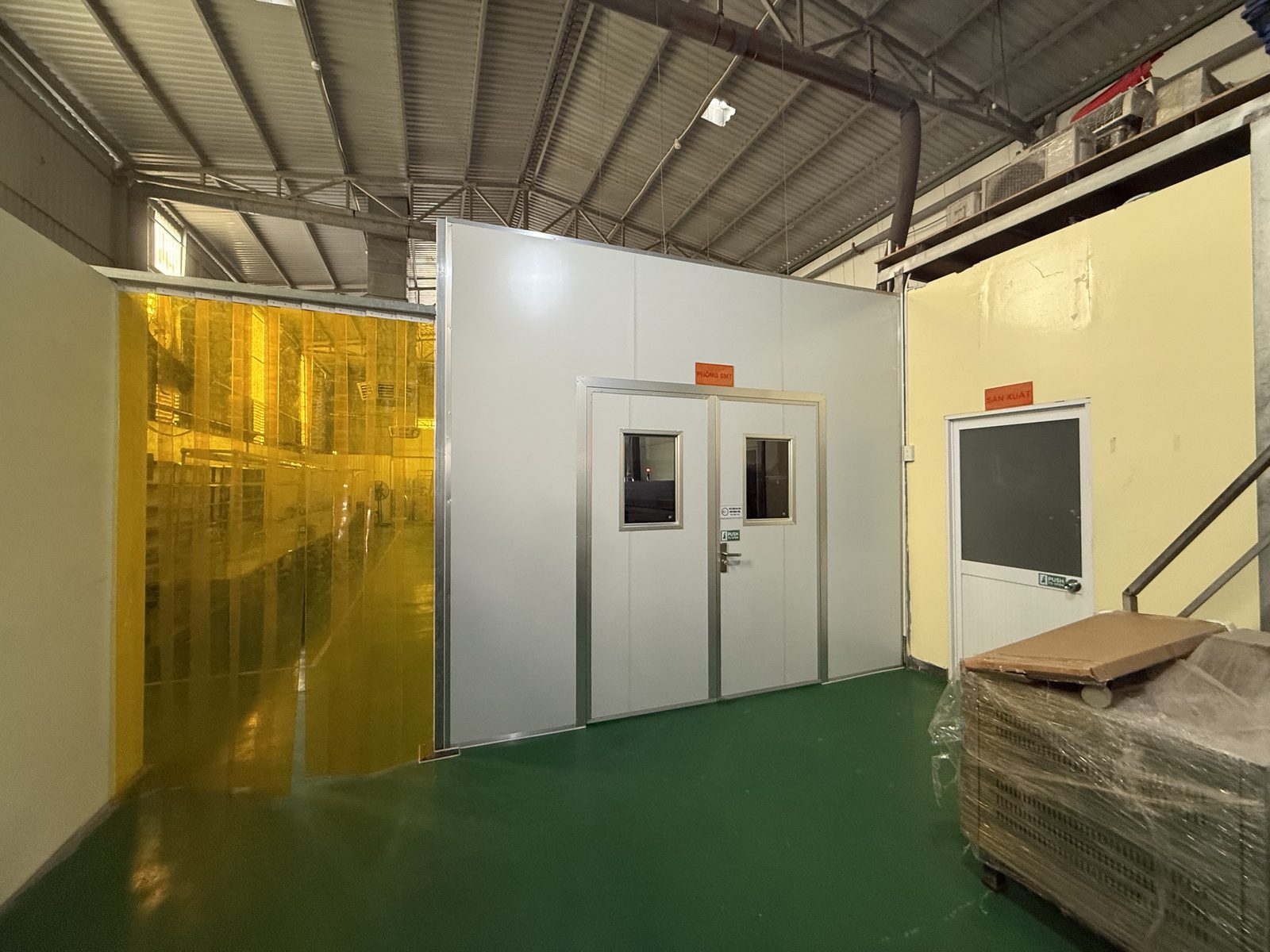
— and, notably, an in-house SMT room behind clean-room doors, meaning PCB assembly at scale without outsourcing the most technically demanding step to a separate vendor.
What 200 real units taught us that no prototype could
April 2026 also brought the first small manufactured batch: 200 units. Not hand-assembled one-offs, not 3D-printed proofs of concept — real units through real manufacturing, with the design fully committed.
We design everything in-house, but turning that design into a physical product means coordinating vendors who each own a piece of the process: PCB fabrication and assembly, structural 3D printing, the helmet shell, packaging. Nearly every one of them produced a surprise.
The sharpest one: a fabrication issue during PCB manufacturing altered part of the primary circuit path on the whole batch. We didn't have to scrap it, because we'd already designed for exactly this possibility — Kamoji's PCB deliberately includes duplicate and backup components on certain circuits, the kind of redundancy that never makes it into a textbook-efficient board layout but exists for moments like this one. When the primary path broke, the backup held, and the batch shipped. It's the sort of design decision that looks wasteful right up until it isn't.
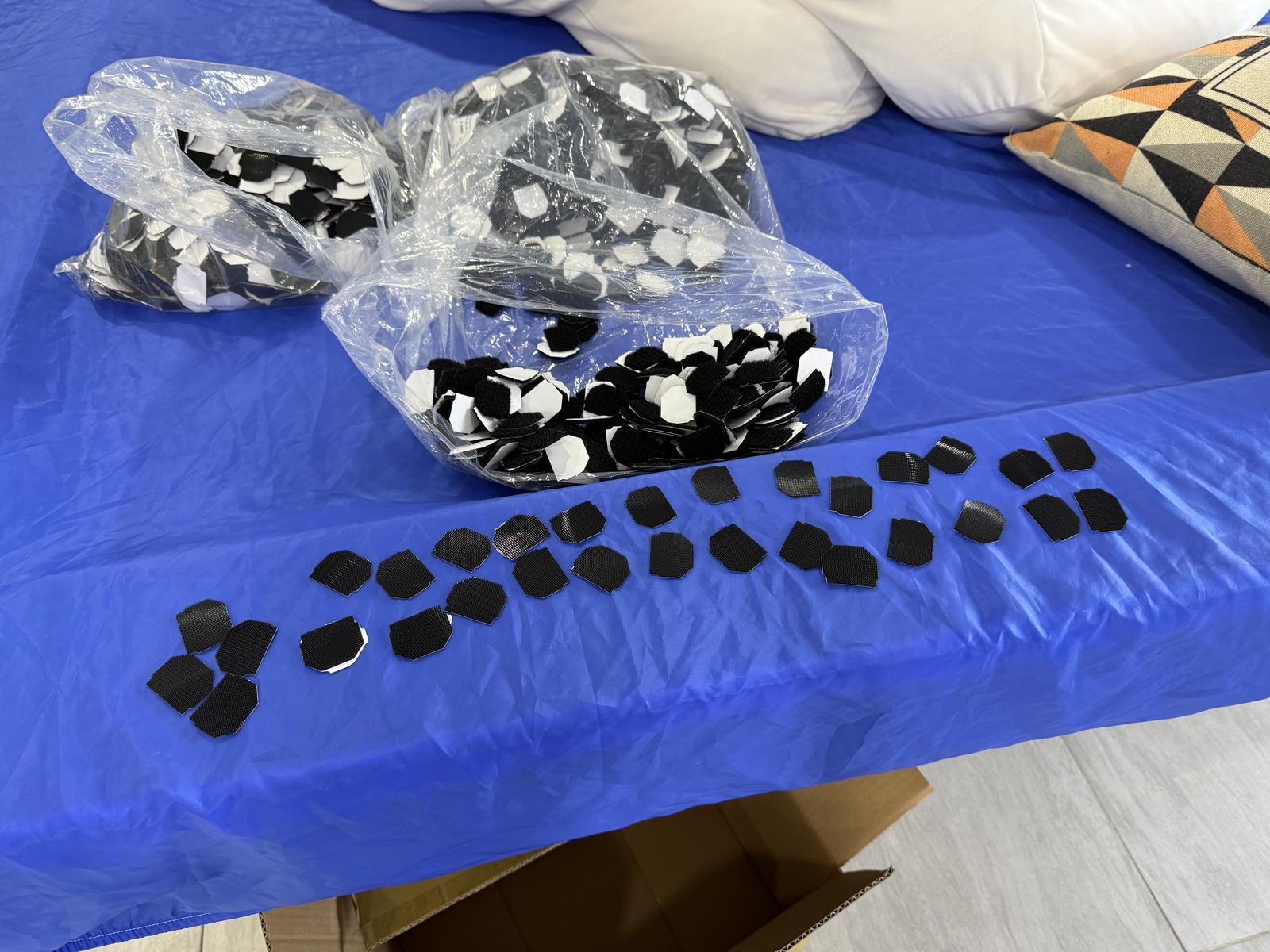
With 200 boards to validate, manual testing wasn't realistic, so we built a test rig: a fixture that loads firmware onto each board and runs a semi-automated sequence checking that every sensor works before the unit clears for assembly. A unit that ships with a dead IMU or microphone isn't just a faulty product — Kamoji's whole personality depends on what its sensors tell it.
Education before conversion
With manufactured units in hand, we stood up a dedicated marketing effort to introduce Kamoji properly. In-car accessories and dashboard companions exist in quantity already, but a character-driven, sensor-integrated, open-source companion that actually understands what the car is doing is not a category most people have encountered yet. That makes the first challenge education, not conversion — showing people what it does and how it feels to have one, before asking them to want it.
What this project actually is
Kamoji is the product of accumulated experience: a decade of Originally US running its own IoT infrastructure in production, and a CTO whose background spans mechanical design, electronics, firmware, software, animation and video production, with a hand in every part of this device.
The team operates on one non-negotiable principle: no deadline, no compromises. Kamoji took as long as it took — a 19-month pause included — because shipping something we weren't proud of wasn't an option. Going fully open-source from day one reinforces that by removing anywhere to hide: every line of code, every schematic, every component choice is visible to anyone who knows what they're looking at. That's uncomfortable in a useful way. No shortcuts, no "fix it later" — every custom component and every redundant circuit has to be something we're willing to defend in public.
The device isn't finished. It's real, it runs, it has a face, and people can buy it.
Where things stand now: the R8 board finished full testing in late July 2026 and is moving into FCC certification.
This is the last post in our series on how Kamoji got built. If you missed the earlier ones: origins, the PCB and open hardware, the ESPHome rebuild, and feature philosophy.